The honest answer is that Bali is good all year. The useful answer is that it is good in different ways at different times, and the month you pick changes what you should plan to do while you are here.
This guide is written around activity rather than weather alone, because "the dry season is best" is technically true and practically useless if what you actually want is to dive with mola mola or walk rice terraces at their greenest.
Bali's Two Seasons, Briefly
Bali sits eight degrees south of the equator, so temperature barely moves all year: roughly 27–32°C on the coast, cooler as you climb. What changes is rain and humidity.
The dry season runs April to October. Mornings are clear, humidity is lower, and sunrise treks are at their most reliable. The green season runs November to March, bringing afternoon downpours that are usually short and heavy rather than all-day grey, plus a landscape that is genuinely, spectacularly green.
Month by Month
| Months | Conditions | Best for | Crowds |
|---|---|---|---|
| Apr – Jun | Dry, clear, comfortable humidity | Trekking, manta season, everything | Moderate |
| Jul – Aug | Driest and coolest | Diving, mola mola, sunrise treks | Peak |
| Sep – Oct | Dry, warming up | Diving, trekking, better value | Moderate |
| Nov – Dec | Rain begins, humid | Green landscapes, waterfalls | Low, then peak at Christmas |
| Jan – Mar | Wettest, most humid | Waterfalls, rice terraces, quiet villas | Lowest |
Best Time for Trekking
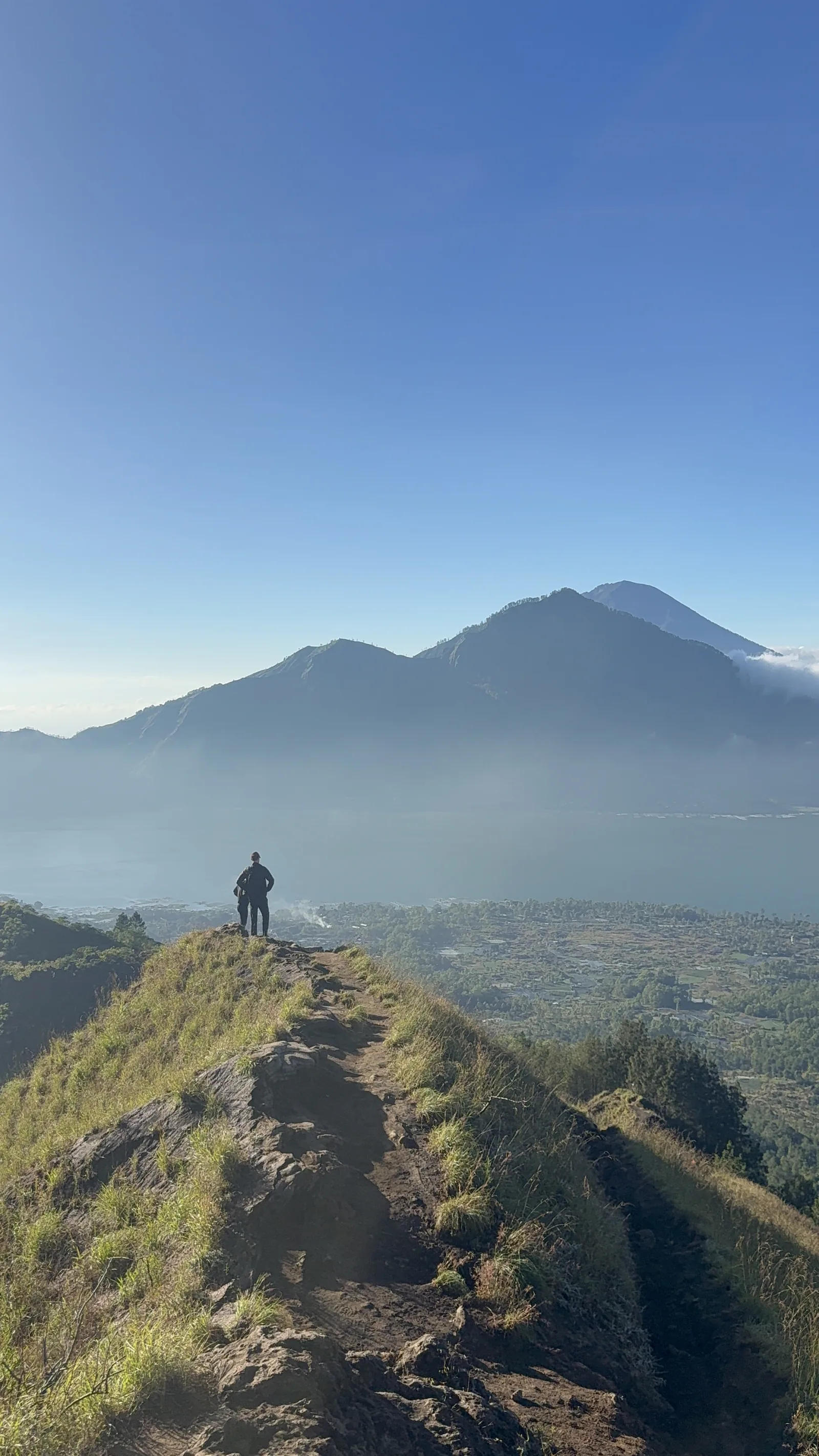
April to October, without much argument. For a sunrise trek like Mount Batur you want a clear eastern horizon, and the dry season simply delivers that more often.
That said, we run Batur year-round, and green season treks have a particular quality: fewer people on the mountain, and a decent chance of standing above a thick cloud layer rather than under a clear sky. Different photograph, equally worth the 3am alarm. If a guaranteed clean sunrise matters to you, come between June and September.
Best Time for Diving
Bali diving is good all year, but two things are seasonal and both are worth planning around.
- Manta rays at Nusa Penida are resident year-round, with the most consistent sightings roughly April to May. They visit cleaning stations at Manta Point, and the encounters are shallow, which makes them accessible even on a Discover Scuba dive.
- Mola mola, the oceanic sunfish, rise from deep water around Nusa Penida roughly July to October. The water is colder then, often 20–24°C, so a thicker wetsuit matters. Sightings are never guaranteed; that is the nature of a deep-water fish.
Visibility is generally best in the dry season. In the green season, runoff can reduce it at some coastal sites, though Tulamben and Menjangan tend to hold up well.
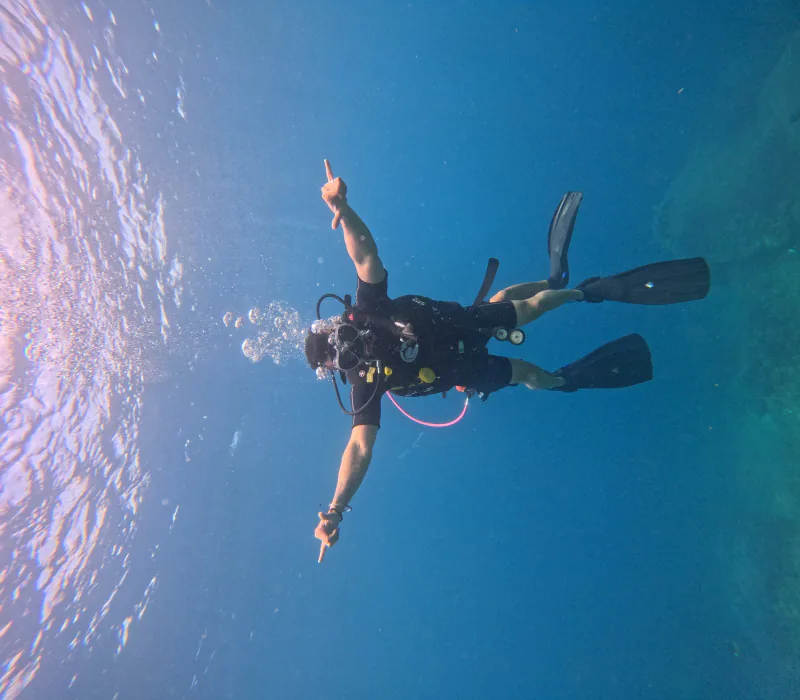
Nusa Penida dives work year-round. Manta sightings are most consistent around April and May.
Best Time for Rice Terraces and Waterfalls
This is where the green season earns its name. The UNESCO-listed Jatiluwih and Subak landscapes are working farmland, and they look their best when they are actually being farmed.
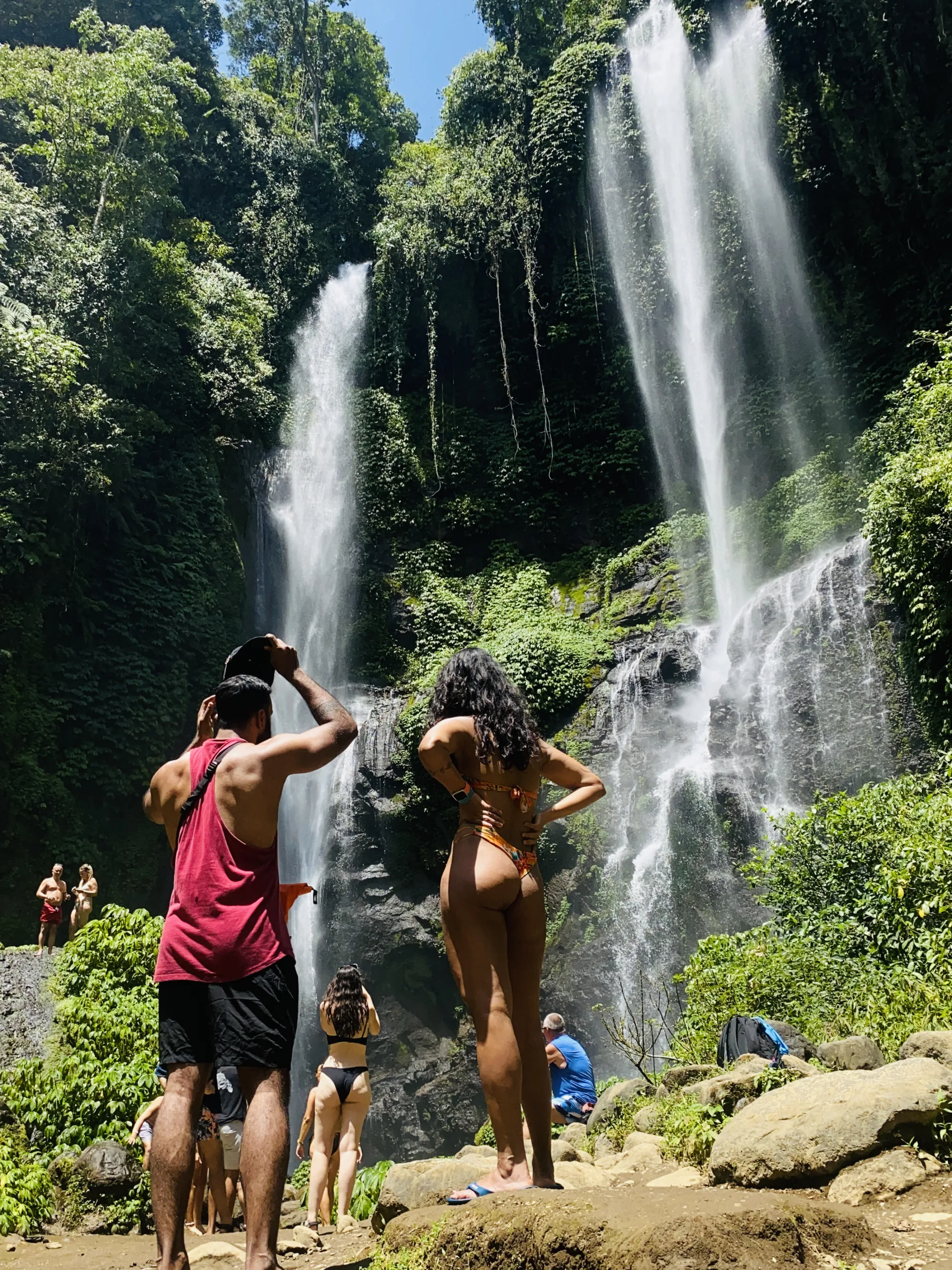
Terraces are flooded and mirror-like around January to February, vividly green from February to April, and golden just before harvest. Waterfalls run hardest between December and March. If your priority is photographs of Bali at its most lush, the "worst" weather months are the right answer.
Not sure which month suits what you want to do? Tell us how you like to move and we will build the itinerary around it.
Best Time for Surfing
Bali's surf seasons are the mirror image of each other, and which coast you want depends entirely on the month.
From April to October, the dry season brings offshore winds to the west coast. This is when Uluwatu, Padang Padang, Bingin and the Bukit peninsula work best, and it is also when they are busiest. From November to March, the wind swings and the east coast comes alive: Nusa Dua, Sanur and Keramas.
The practical upshot is that Bali has surf all year. Beginners are generally better off in the green season on the east coast, where the swell is smaller and the beach breaks are more forgiving than the reef breaks of the Bukit.
What It Actually Feels Like
Temperature is the least interesting variable here, because it barely moves. Coastal Bali sits at 27–32°C year-round, and the sea is warm enough that most people swim without a thought in any month.
Humidity is what changes. In the green season it is heavy, and a midday walk through rice terraces is more effort than the same walk in July. Altitude helps: Ubud is noticeably cooler than Canggu, and the Kintamani highlands around Mount Batur are cool enough that you will want a jacket at night in any season.
Pack accordingly. In the dry season you need less than you think. In the green season, a light rain layer and quick-dry clothing matter far more than an umbrella, which is useless in the wind that usually accompanies the rain.
Crowds, Prices and One Date to Know
Peak periods are July to August and mid-December to early January. Villas book out, popular sites are busy by mid-morning, and rates rise. The shoulder months of April to June and September to October are the sweet spot: dry-season conditions without peak-season pressure.
One date genuinely worth checking before you book: Nyepi, the Balinese Day of Silence, which falls in March and moves each year with the Saka calendar. For twenty-four hours the entire island stops. The airport closes, no vehicles run, lights stay off and nobody goes outside, including visitors. It is a remarkable thing to witness from a villa, and a genuine problem if you were planning to fly, arrive or trek that day.
So When Should You Come?
If you want one recommendation: May, June or September. You get dry-season reliability for sunrise treks, good diving conditions, landscapes that are still green from the rains, and noticeably fewer people than July and August.
If your dates are fixed and they fall in the green season, come anyway. Plan activity for mornings, keep afternoons flexible, and you will see a version of Bali that most dry-season visitors never do.